Canon EOS R8 Mark II vs EOS R8: What’s Changed and Is It Worth Upgrading?
10 October 20269 min read
Canon has announced the EOS R8 Mark II, bringing in-body image stabilisation, more direct controls and smarter autofocus to its compact full-frame range. But the original EOS R8 was already a capable camera, with a 24.2MP sensor, fast continuous shooting and excellent 4K video. So what has actually changed, and does the new model justify an upgrade?
Announced on 16 September 2026, the EOS R8 Mark II looks less like a complete reinvention and more like Canon addressing some of the original cameraâs most obvious compromises. Here is what matters for photographers and hybrid creators, based on Canonâs published specifications rather than a hands-on test.
Who is the EOS R8 Mark II for?
Travel and street photographers who want full-frame image quality without carrying a large camera body.
EOS R8 owners who have been missing in-body stabilisation or an autofocus joystick.
Hybrid photographers and videographers looking for a compact camera with serious video controls.
Family, wildlife and event photographers who will benefit from improved subject recognition and more flexible pre-capture.
Canon EOS R8 Mark II vs EOS R8: At a glance
Feature
Canon EOS R8
Canon EOS R8 Mark II
Sensor
24.2MP full-frame CMOS
24.2MP full-frame CMOS
In-body stabilisation
No
Yes; up to 7.5 stops with compatible lens and test conditions
Weight with battery and card
Approx. 461g
Approx. 546g
Autofocus joystick
No
Yes; new multi-controller
Maximum electronic burst
Up to 40fps
Up to 40fps
Pre-capture
Up to 0.5 sec in 30fps RAW Burst mode
Up to 0.5 sec / 20 frames in 40fps H+ mode, including RAW and JPEG
Video resolution
Oversampled 4K up to 60p
Oversampled 4K up to 60p
Memory cards
One SD slot
One SD slot
Battery
LP-E17
LP-E17
The headline is simple: the R8 Mark II adds stabilisation and improves handling without changing the basic 24.2MP, 40fps, 4K/60p formula.
In-body stabilisation is the biggest upgrade
The original EOS R8 had no in-body image stabilisation (IBIS). That made handheld work more dependent on a stabilised lens, a steady shooting technique or faster shutter speeds. The Mark II introduces sensor-shift stabilisation, with Canon claiming up to 7.5 stops at the centre of the frame when used with a suitable lens.
For travel photography, that has obvious appeal. It can make handheld photos of interiors, city streets at dusk and static landscapes more practical when you would rather leave the tripod at home. It should also help with handheld video, alongside the cameraâs Movie Digital IS options.
There are limits. Canonâs maximum rating was achieved under specific CIPA 2024 test conditions, and IBIS reduces camera shake rather than freezing moving people or animals. It is a meaningful improvement, but it does not replace a fast shutter speed when your subject is moving.
Better handling, with a small weight penalty
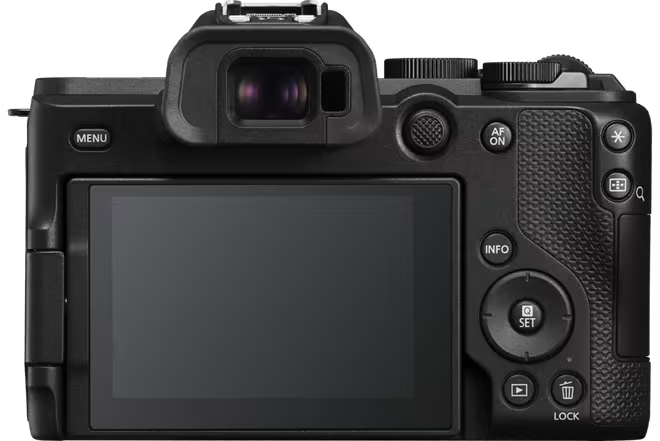
Canon has also changed the way the camera feels and operates. The R8 Mark II gains a multi-controller joystick, making it quicker to reposition an autofocus point without relying on the touchscreen. Customisable controls and an updated body design are welcome additions for photographers who prefer direct, tactile operation.
The camera weighs approximately 546g with battery and card, compared with 461g for the original R8. That is an extra 85g, although it remains a relatively compact full-frame body. Canon also offers the optional EG-E2 extension grip, which provides more room to hold the camera while retaining battery access.
The trade-off is sensible: the Mark II is not as featherweight as the original, but the added stability and control may make it easier to shoot with for longer periods.
40fps is familiar; pre-capture is more flexible
Canon promotes the Mark IIâs 40 frames-per-second electronic shutter, but 40fps was already available on the original EOS R8. The improvement is not the peak frame rate; it is the way the camera handles fast action.
Canon quotes an improved buffer of up to 73 RAW images in a burst. Pre-continuous shooting can also save up to 20 frames from roughly half a second before the shutter is fully pressed, using the 40fps H+ shooting mode.
Importantly, the original R8 already offered half-second pre-shooting in its separate 30fps RAW Burst mode. The Mark II makes this approach more convenient and flexible, supporting individual RAW, C-RAW, JPEG and HEIF captures in its newer pre-continuous mode.
That could be helpful for birds taking flight, children playing or fleeting street moments. As with any electronic shutter, fast-moving subjects and some artificial lighting can still create distortion or banding, so 40fps is not automatically the best setting for every scene.
Smarter autofocus for people, animals and vehicles
The R8 Mark II retains Canonâs Dual Pixel CMOS AF II system but builds on it with improved tracking persistence and subject detection. The camera recognises people, animals and vehicles, and is designed to hold focus when a subject is briefly obscured.
A more distinctive addition is Register People Priority. You can register up to 10 people in the camera, with further sets stored on a memory card, and tell the autofocus system which faces to prioritise. For family trips, weddings or busy events, that could be genuinely useful when several people appear in the same frame.
Canon also specifies autofocus sensitivity down to EV â7.5 under defined stills-shooting conditions. That is a laboratory measurement rather than a promise that every lens will focus reliably in near-darkness, but it points to improvements in demanding light.
A strong hybrid camera, but 4K/60p is not new
For video creators, the headline recording option is 4K up to 60p, oversampled from 6K, with Full HD capture up to 180fps for slow motion. These headline resolutions and frame rates were already offered on the original EOS R8, so they should not be mistaken for a wholesale video upgrade.
The new camera adds creative flexibility through Filmtone Colour Filters, Custom Picture settings, LUT support, HLG and Canon Log 3, plus a 2.35:1 Cinema View option. It also supports USB-C connectivity at up to 10Gbps, USB charging and power delivery, and USB livestreaming.
For anyone mixing travel photographs, short films and social content, these are useful tools. The more important question is whether the handling, colour workflow and IBIS improve the way you shoot, rather than the resolution number on the specification sheet.
Canon has also introduced Dual Pixel 3D, which can record depth information alongside JPEG images for conversion into 3D content using a Windows application. It is an interesting creative extra, although unlikely to be the main reason most photographers choose this camera.
Which RF lenses make sense for travel?
A small full-frame body is only part of a lightweight kit; your choice of lens matters just as much.
RF 24-105mm F4-7.1 IS STM: a practical everyday zoom for landscapes, people and general travel.
RF 45mm F1.2 STM: a fast prime for portraits, evening scenes and shallow depth of field.
RF 100-400mm F5.6-8 IS USM: an option for wildlife and distant details without moving to a particularly heavy telephoto lens.
Check overall kit weight, lens compatibility and whether you actually need the extra aperture or reach before deciding. The smallest camera bag is usually the one you are happiest to carry all day.
What are the compromises?
The R8 Mark II still uses one SD card slot and the compact LP-E17 battery. A spare battery or compatible USB power bank makes sense for longer days out. Photographers shooting once-only paid events may also prefer a body with dual card slots for in-camera backup.
It is worth checking the RF lens selection before committing to the system, especially if you rely on third-party autofocus lenses. And while Canonâs new controls improve the experience, the original R8 remains noticeably lighter.
Is the Canon EOS R8 Mark II worth upgrading to?
If you already own an EOS R8: consider the Mark II primarily for IBIS, the joystick, improved autofocus behaviour and easier pre-capture. If you mainly photograph in good light using stabilised lenses, and you are happy with the existing controls, the older camera remains very capable.
If you are moving into full-frame photography: the Mark II is an appealing all-rounder for travel, portraits and mixed photo/video use. Its combination of size, stabilisation and autofocus is likely to be more persuasive than any single headline specification.
If you shoot professional events: think carefully about the single card slot and smaller battery. A larger EOS R-series body with dual cards may be the more reassuring choice where there is no chance to repeat a photograph.
Common mistakes to avoid
Assuming 40fps is a new feature: both generations can reach that speed with an electronic shutter.
Expecting IBIS to freeze action: stabilisation helps with camera movement, not subject movement.
Forgetting the battery and card-slot limits: plan spare power and a backup workflow before travelling or shooting important work.
Choosing a lens purely because the body is small: a heavy zoom can undo much of the portability advantage.
Frequently asked questions
Does the Canon EOS R8 Mark II have in-body image stabilisation?
Yes. Canon rates its coordinated in-body and lens stabilisation at up to 7.5 stops under specified test conditions. The original EOS R8 does not have IBIS.
Is the Canon EOS R8 Mark II sensor higher resolution than the R8?
No. Both cameras have a 24.2MP full-frame CMOS sensor. The major Mark II improvements are stabilisation, handling and additional shooting features, rather than a megapixel increase.
Is 40fps shooting new to the R8 Mark II?
No. Both cameras offer up to 40fps with the electronic shutter. The Mark II adds a larger quoted RAW buffer and more flexible pre-continuous shooting.
Can the EOS R8 Mark II record 4K video at 60fps?
Yes. It records oversampled 4K video at up to 60p, alongside Full HD at up to 180fps. The original EOS R8 also supports those headline video frame rates.
Does the EOS R8 Mark II have two SD card slots?
No. It has one SD card slot, so photographers who need simultaneous in-camera recording to two cards should look at other bodies.
Should I upgrade from the original EOS R8?
Upgrade if in-body stabilisation, an autofocus joystick or the revised tracking and pre-capture would materially help your photography. If your current R8 meets your needs, the shared sensor resolution, burst speed and headline 4K specification mean there is less urgency.
Final thoughts
The Canon EOS R8 Mark II is a thoughtful update to an already capable compact full-frame camera. IBIS is the real headline, supported by more practical controls and refinements to autofocus, action shooting and the creative workflow. It deserves attention from photographers buying their first full-frame EOS R body, but existing R8 owners should weigh those usability gains against the fact that much of the core imaging specification remains unchanged.
This is a specification-based first look, not a hands-on review. Specifications and performance claims are based on Canonâs published information and may vary by shooting conditions.
Sources: Canon EOS R8 Mark II announcement; Canon EOS R8 Mark II product information; Canon EOS R8 product information.
Tamron has announced the 20-40mm F/2.8 Di III VXD (Model A062) for Nikon Z mount, bringing its compact, constant-aperture zoom to Nikon full-frame mirrorless photographers and filmmakers. Scheduled to launch on 22 October 2026, the lens combines an unusually wide 20mm starting point, a constant F/2.8 maximum aperture and a lightweight 380g construction. For photographers […]
The Godox AD800Pro has been named Best Professional Portable Flash at the 2026 TIPA World Awards, recognising its combination of high-output lighting, portability and advanced flash control. With 800Ws of power, battery operation and a dedicated Freeze Mode, the AD800Pro is designed for professional photographers who need studio-level lighting performance without being tied to a […]
Sony has expanded its full-frame E-mount lens range with two new super-telephoto primes: the FE 400mm F4.5 GM OSS and FE 600mm F6.3 GM OSS. Both weigh less than a kilogram, making them particularly interesting for wildlife, bird and sports photographers who want serious reach without carrying traditionally heavy super-telephoto equipment. Announced on 15 September […]