Capturing Motion: The Evolution and Importance of Camera Dollies in Film-making
18 March 20262 min read
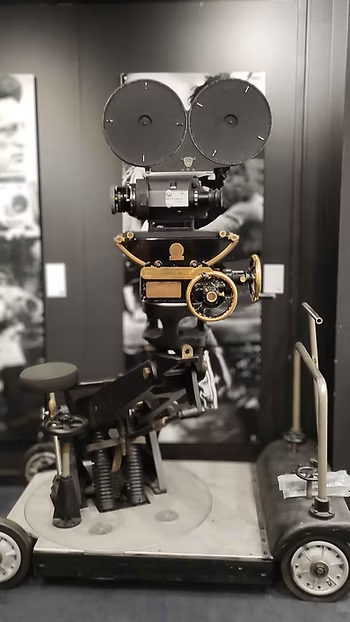
Camera dolly movement refers to a technique in which a camera is mounted on a platform, known as a camera dolly, which moves along a track. This creates a smooth and stable movement of the camera, allowing filmmakers to capture dynamic shots and convey a sense of motion.
The equipment used for camera dolly movement typically includes a dolly, which can be mounted on tracks or wheels, and a camera rig that is attached to the dolly. The camera rig may include a tripod, a fluid head, and other accessories for stabilization and control.
The use of camera dollies in filmmaking dates back to the early 20th century. In the silent film era, camera dollies were often used for tracking shots, which allowed the camera to follow actors or objects in motion. This technique was used to great effect in films such as “The Birth of a Nation” (1915) and “Intolerance” (1916) by director D.W. Griffith.
Copywrite David Lutwyche
Over time, camera dolly technology evolved to include motorized dollies, which could be controlled remotely, and hydraulic dollies, which allowed for smoother movements and greater precision. In the 1970s, the invention of the Steadicam by Garrett Brown revolutionized the way camera movements were captured in films, allowing for handheld shots with greater stability and control.
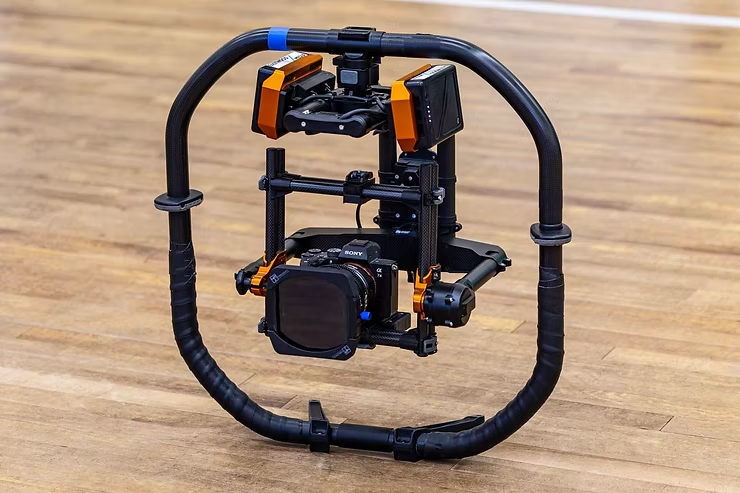
Today, camera dollies are still widely used in filmmaking, and their technology has continued to evolve. Modern dollies often include computer-controlled motors, which allow for precise movements and repeatability, as well as wireless remote control and advanced stabilization features. Additionally, many filmmakers have adopted new technologies, such as drones and gimbals, for capturing dynamic camera movements.
The camera dolly movement has been an important technique in film-making for over a century, allowing filmmakers to capture dynamic shots and convey a sense of motion. The equipment used for camera dollies has evolved over time, from manual dollies to motorized and hydraulic systems, and modern technologies such as drones and gimbals have expanded the possibilities for capturing dynamic camera movements.
Pro Camera HubLighting / Buying guide Godox V100 / V1Pro / V1 Mid Three flashes.Which oneis for you? Three round-head speedlights, three different approaches to lighting. We look at the Godox V1 mid, V1Pro and V100 to see which makes the most sense for weddings, events, portraits and off-camera photography. 9 October 202616 min read […]
If you’ve ever looked at an LED light specification, you’ve probably seen a huge lux figure proudly displayed on the box. The assumption is often simple: bigger number equals brighter light. Unfortunately, it isn’t quite that straightforward. Understanding lux can help photographers and filmmakers compare lights more effectively, avoid misleading marketing claims, and make better […]
Sometimes the best shoots aren’t about chasing perfection — they’re about capturing honesty.This recent café shoot at the South Wales Aviation Museum was exactly that: a small, personal project I carried out in my own time as a volunteer, purely to help the museum promote its café and community space. It wasn’t for work, and […]